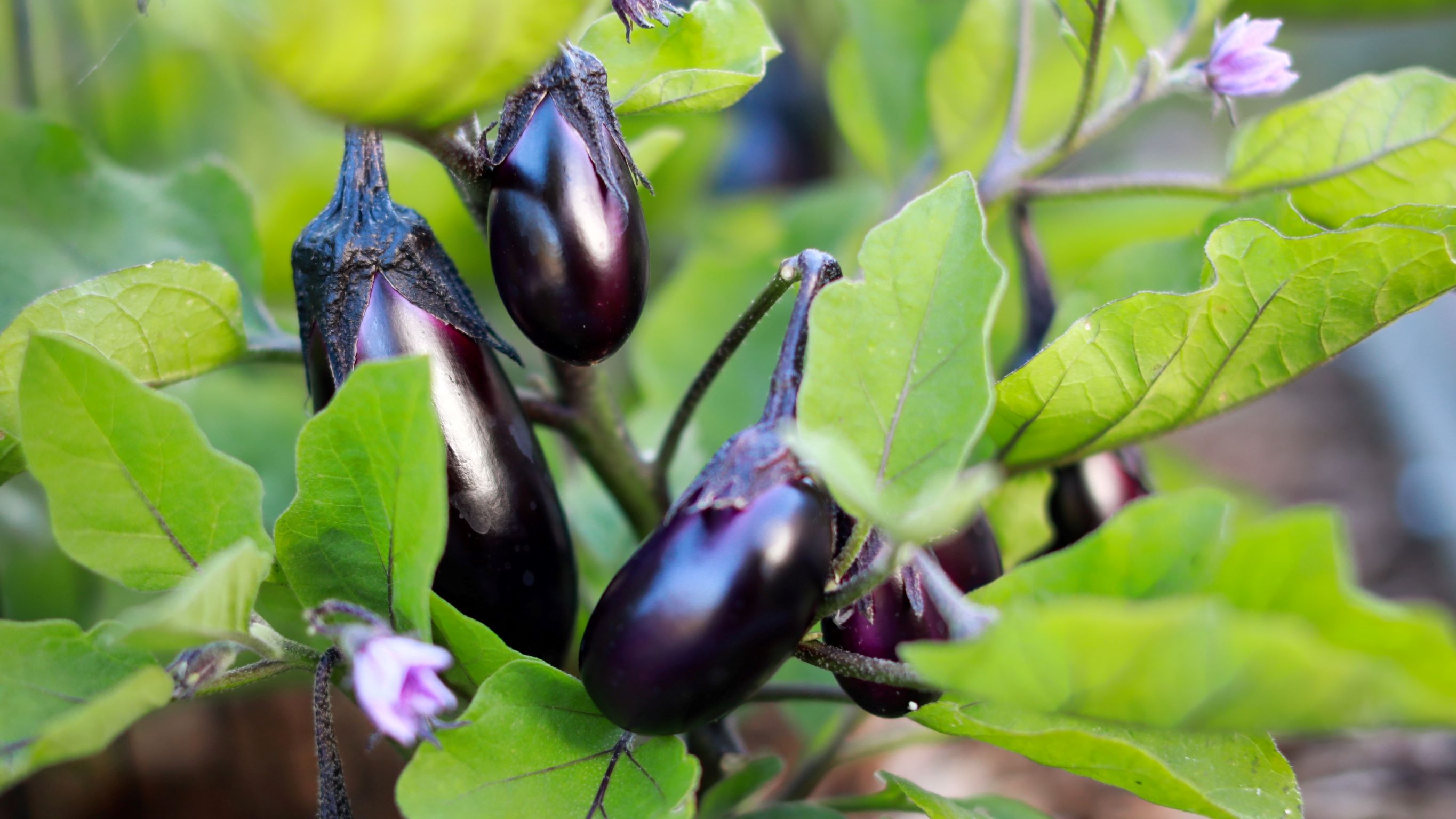
Eggplant
Beauty
Think of eggplant as beauty food, dressed in royal purple. Its anthocyanins act like a shield against everyday oxidative stress—the kind that can chip away at the look of firm, elastic skin over time. The high water content supports a fresh, hydrated appearance, while manganese helps your skin’s own antioxidant defenses work smoothly. A happy gut often shows up on your face, and eggplant’s fiber nourishes the microbiome that influences calm, clear-looking skin. Together with healthy fats (like extra-virgin olive oil in the same meal), this vegetable helps you build meals that are both glow-giving and deeply satisfying.
Culinary Uses
Eggplant excels at soaking up flavor and delivering it back in a silky, savory bite. Roast halves until the flesh collapses, then scoop and swirl with tahini, lemon, garlic, and olive oil for classic baba ghanoush. Dice and braise with tomatoes, zucchini, peppers, and herbs for ratatouille; or simmer with capers, olives, and a splash of vinegar for Sicilian caponata. Layer slices with tomato sauce and mozzarella for eggplant parmigiana. Go smoky and spiced with fire-roasted baingan bharta, or glaze Japanese eggplant with miso (nasu dengaku). It loves olive oil, garlic, onions, tomato, basil, oregano, thyme, mint, cumin, coriander, smoked paprika, chili, soy sauce, miso, sesame, tahini, yogurt, feta, pine nuts, and pomegranate molasses. For plush texture, cut, lightly salt, and pat dry before cooking; score thick slabs, brush generously with olive oil, and grill or roast until bronzed and tender. Choose eggplants that feel heavy for their size with taut, glossy skin, and cook until the interior is silky and custardy.
Health
Eggplant is a hydration-forward, fiber-rich vegetable that supports everyday wellness. Its deep purple skin concentrates anthocyanins—especially nasunin—alongside chlorogenic acid, both well-studied antioxidants that help neutralize free radicals and support healthy blood vessels and heart function. The fiber in eggplant helps keep digestion regular and feeds beneficial gut microbes, which in turn can support steady energy and comfortable fullness after meals. You’ll also find potassium (important for normal blood pressure), manganese (a cofactor for antioxidant enzymes), and small amounts of B vitamins that help your body turn food into usable energy. Low in calories yet satisfying, eggplant fits beautifully into balanced, plant-forward eating patterns associated with long-term metabolic and cardiovascular health.
Holistic
Originating in South and Southeast Asia and woven into Persian, Ottoman, and Mediterranean kitchens, eggplant (also called aubergine or brinjal) has long been celebrated for turning humble ingredients into deeply nourishing comfort. Historically, cooks valued its luxurious, velvety texture and the vitality signaled by its naturally purple pigments. Today, it remains a pillar of Mediterranean-style eating—an approach linked with longevity and overall wellbeing—offering a plant-forward way to build abundance, warmth, and balance on the plate.
Products