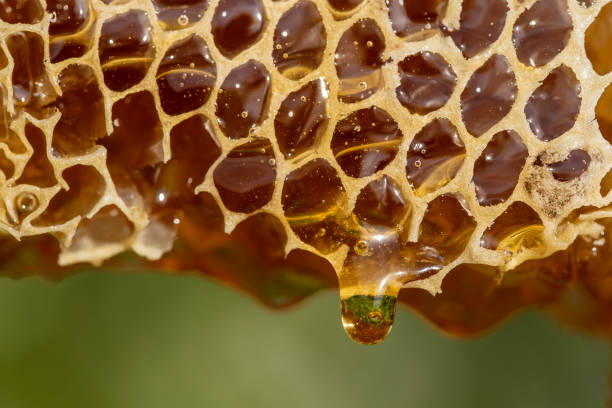
Honey
Beauty
Honey is a luxurious humectant—it draws water into the skin—leaving your complexion dewy, comfortable, and plump. Its gentle, naturally occurring acids (including gluconic acid) offer a whisper-soft exfoliation that smooths texture and boosts radiance without harshness. Antioxidants in honey help defend against environmental stressors that can dull the skin’s appearance, while its calming properties make it a favorite for skin that looks easily flushed or reactive. For hair, a little honey whisked into your conditioner enhances slip, tames frizz, and imparts high‑shine gloss by sealing in moisture. Used as a short, rinse‑off mask, it can leave both scalp and strands feeling balanced, smooth, and luminous.
Culinary Uses
Think of honey as both sweetener and seasoning. Its floral complexity rounds sharp edges and ties flavors together. Drizzle it over yogurt, ricotta toast, fresh figs, or roasted stone fruit; spoon it onto breakfast bowls, pancakes, and cornbread. In savory cooking, whisk honey with lemon, Dijon, and olive oil for a balanced vinaigrette, or stir it into marinades with soy, garlic, and chili to glaze salmon, chicken, or seasonal vegetables. In baking, honey lends moisture and a burnished crust—use about 3/4 cup honey for every 1 cup sugar and reduce other liquids slightly; lower oven temperature by roughly 25°F for best color. It shines in drinks too: swirl into tea or lattes, shake into lemonade, or blend into smoothies to soften acidity. As a finishing touch, add honey at the end of cooking or to warm (not boiling) liquids to preserve its delicate aromatics and terroir-driven character.
Health
Honey is nature’s quick, clean fuel: a balanced blend of glucose and fructose that your body can use immediately for steady energy. Beyond sweetness, it carries a spectrum of protective plant compounds—flavonoids and phenolic acids—that act as antioxidants, helping to neutralize everyday oxidative stress from busy lives and workouts. When diluted, honey’s native enzyme system (including glucose oxidase) generates small amounts of hydrogen peroxide, contributing to its well-known antimicrobial character. Its natural acidity and low water activity further support this effect. A small but meaningful bonus: honey contains trace minerals and amino acids, along with prebiotic oligosaccharides that can help nourish beneficial gut bacteria. Its soothing viscosity makes it a time‑honored choice for calming the throat, while its complexity of flavor often lets you use less than refined sugar to achieve the same satisfaction.
Holistic
Across civilizations, honey has symbolized vitality and care. Ancient Egyptians prized it for ceremonial offerings and used it in balms and dressings; classical texts describe honey as a soothing, harmonizing food. In Ayurveda, honey (madhu) is celebrated as a "yogavahi"—a carrier that helps deliver and balance herbal formulas—valued for supporting throat comfort and digestive ease. Traditional kitchen pharmacopeias from the Mediterranean to Asia have long blended honey with herbs, warm water, spices, and citrus to create restorative tonics. In short, honey sits at the crossroads of nourishment and ritual—a golden thread connecting wellness practices over millennia.
Products