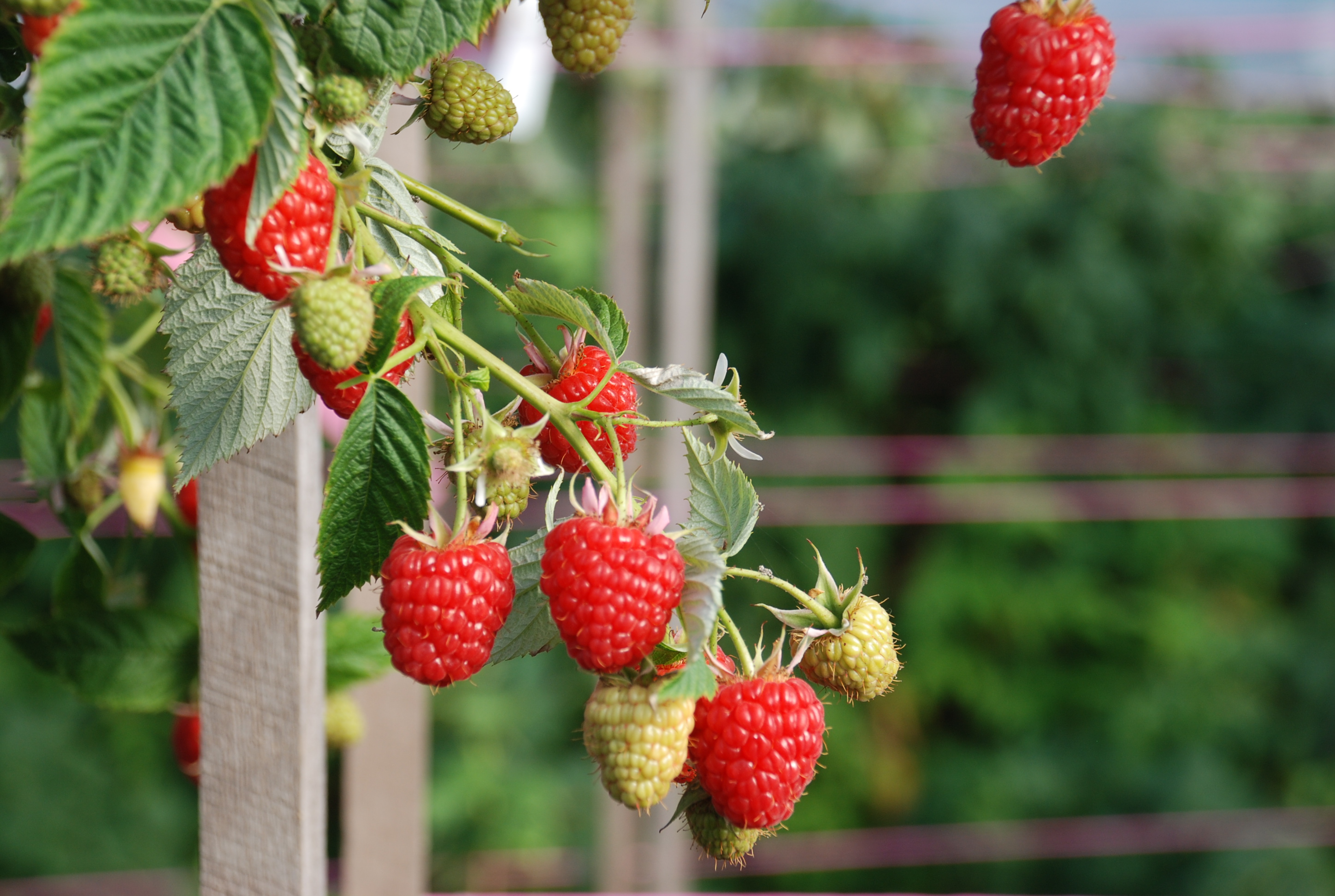
Raspberries
Beauty
Think of raspberries as a daily beauty assist from the inside out. Their vitamin C helps your body build and protect collagen, the scaffolding for firm, smooth skin. Anthocyanins and ellagic acid offer antioxidant support against everyday environmental stressors that can dull the complexion, while manganese plays a role in your own antioxidant defenses. Raspberries are also naturally water-rich, lending gentle hydration. Enjoy them with iron-containing plant foods (like oats, nuts, or leafy greens)—their vitamin C can enhance iron absorption, a quiet win for healthy-looking hair. The overall effect is subtle but meaningful: a nutrition pattern that supports bright, supple skin and a fresh, well-rested look.
Culinary Uses
Raspberries bring a pop of acidity and perfume to both sweet and savory dishes. Tumble them over yogurt, chia pudding, or oatmeal; fold into pancakes, muffins, or a simple almond cake; or spoon a quick coulis (just berries, a touch of sugar, and lemon) over cheesecake or ice cream. They pair beautifully with dark chocolate, vanilla, citrus, almond, pistachio, hazelnut, mint, basil, and rose. For savory flair, toss fresh berries into an arugula salad with goat cheese and toasted walnuts, crack black pepper over them, or reduce with balsamic for a glossy sauce to drizzle on chicken, duck, or roasted vegetables. Blitz into smoothies, shake into cocktails and mocktails, or steep in vinegar for a rosy pantry staple. For easy prep, briefly macerate with a squeeze of lemon and a pinch of sugar to create jewel-like juices, or freeze on a tray and store for baking, smoothies, and sauces year-round.
Health
Raspberries are small, mighty, and impressively nutrient-dense. A single cup offers about 8 grams of fiber—fuel for a healthy gut and a steady, satisfied appetite. They’re naturally low in sugar and calories, yet rich in vitamin C, which supports immune function and helps your body form collagen, the protein that keeps tissues resilient. You’ll also find manganese, a mineral involved in energy metabolism and bone support. Their vivid ruby color comes from anthocyanins, alongside ellagitannins (which your gut can convert to urolithins)—polyphenols studied for their antioxidant and inflammation-modulating properties. Together, fiber and polyphenols help nurture a diverse microbiome, while the berry’s low glycemic impact makes it a smart choice for balanced blood-sugar meals. In short: bright flavor, deep nutrition.
Holistic
Long before they starred in patisserie, raspberries were prized in kitchen gardens and wild hedgerows across Europe and Asia. Their species name, Rubus idaeus, nods to Mount Ida, a reminder of their old-world roots. In traditional foodways, tart berries were gathered at summer’s peak, preserved as jams and syrups, and served in winter for a lift of brightness and vitality. Herbal lore has long celebrated the raspberry plant—most famously its leaves as a tea—while the fruit itself symbolized abundance and the sweetness of the season. Today, many still reach for raspberries as a simple, joyful ritual: a bowl of sun-bright berries that feels both restorative and celebratory.
Products